
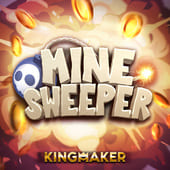
Minesweeper Guide | Minesweeper Play & Demo
Minesweeper is a clue-reading cards game in which each safe square helps you map a hidden field and each choice carries a clear risk. On ninong gaming, a Minesweeper Demo can help you understand the rhythm before you decide whether a real session suits your budget.
Minesweeper
Type: cards
Short rounds, visible clues, and deliberate decisions make Minesweeper easy to approach while still rewarding attention.
Minesweeper Related Card Picks
If you enjoy the measured pace of Minesweeper, these cards selections offer different ways to make a decision, read a board, or follow a changing result. Select an icon to use the same ninong gaming promotion path.

What Makes Minesweeper a Focused Card Experience?
The short answer is that Minesweeper combines deduction with controlled exposure: numbered clues describe nearby danger, but they do not remove the need to choose. That balance gives the game a calm, puzzle-like surface and a meaningful decision at every unopened square.
A Minesweeper board is read locally. When a revealed number touches a group of covered squares, it tells you how many mines are adjacent to that number. The useful skill is not guessing every hidden square at once; it is comparing the clue with the flags and safe spaces already established around it. A small, accurate map is more valuable than a fast sequence of clicks.
Clues become a map
A number is a compact instruction. A one suggests one nearby mine, while a larger number signals a denser area. Marking a likely mine and opening a square that is logically safe lets the map grow without relying on a hunch.
visibility Attention drives pace
Minesweeper does not require a complicated control set. It asks you to inspect, compare, and then act. Keeping the board readable and avoiding rushed taps helps you notice when two clues describe the same covered group.
The visual language also makes a Minesweeper Demo useful for new visitors. A practice round can show how clues open space, how a flag records a working theory, and how a complete board feels when every decision is connected. A demo is for learning the interface, not proof of a future result.
How to Use Minesweeper from the First Click to the Last?
The practical route is simple: set a limit, open a square, read the numbers, mark only evidence-based hazards, and stop when the board or your limit says the round is finished. This approach keeps Minesweeper understandable and makes a Minesweeper Demo a safe place to learn the controls.
1. Set the session
Choose a time and money boundary before opening the game. If you are using a funded mode, treat the stake as entertainment spending rather than income. A clear boundary prevents a close call from changing your plan.
2. Make an opening choice
Start with one square and pause long enough to see the result. The opening reveal gives you the first part of the information set. Do not interpret one safe click as a promise that the next square is safe.
3. Read each number
Count the covered squares touching a clue and compare that count with the mines the clue requires. When your notes account for all nearby mines, the remaining covered squares beside that clue can be treated as candidates for a safe move.
4. Mark a working theory
Use a flag as a reminder, not as a guarantee. A flag records what the surrounding clues currently support. If a later reveal conflicts with that theory, revise it rather than forcing the board to fit an earlier assumption.
5. Continue in small areas
Minesweeper is easier to follow when you solve one connected pocket at a time. Scan the edges of opened areas, revisit clues whose neighbors changed, and let new information determine the next move.
6. Settle the round
When the board ends, review the result without chasing it. Record how the round felt, close the session at the planned limit, and return only when you can make choices with the same calm attention.
Visitors comparing a practice round with a live session should remember that the interface can look similar while the financial decision is different. The 5 Card Poker guide is another useful internal reference for thinking about choices and limits in a cards setting, but no other game changes the random nature of its own results.
Minesweeper RTP: How to Read Return and Risk
RTP is a long-run mathematical estimate of the amount returned across many comparable plays; it is not a promise for one Minesweeper round. The best analysis therefore separates the published game setting from short-term outcomes and treats volatility, mine placement, and the player’s stop point as different parts of risk.
When checking Minesweeper RTP information, first look for the game’s own information panel or published rules. Confirm which mode the figure describes, whether different mine counts or payout choices use different tables, and whether the displayed value is theoretical rather than a forecast. A Minesweeper Demo may explain the controls, but a demo result does not establish an RTP.
Long-run lens
RTP is meaningful over a large sample, not as a target for tonight. It can help compare transparent rulesets, yet it cannot identify which individual square will be safe or when a particular result will appear.
Risk and variance
A higher possible return can arrive with less frequent successes. Consider how many decisions you want in a session, the size of each stake, and whether a losing sequence would change your behavior before selecting a mode.
Read the conditions
Check the number of mines, the available cash-out or completion rules, and any minimum or maximum stake shown in the interface. Those details define what a displayed rate actually means for the chosen configuration.
Keep a personal limit
Even a clearly stated RTP does not make a game a source of guaranteed income. A deposit cap, a time reminder, and a decision to stop after the planned loss protect the purpose of entertainment.
For broader context, the Sweet Bonanza information page shows why published return figures should be compared within the rules of the same game rather than used as a prediction for Minesweeper. The figures are analytical context, not a reason to increase a stake.
Which Minesweeper Dimensions Matter When Comparing Options?
The most useful comparison is not simply “which game looks more exciting”; compare clarity, pace, exposure, and control first. For Minesweeper, these dimensions reveal whether the format matches your attention span and your predefined budget.
Information clarity
Look for readable clues, an obvious state for covered and opened squares, and rules that explain how the selected board works. Clear feedback makes it easier to separate a reasoned move from a guess.
Decision pace
Some visitors prefer quick decisions; others want time to inspect a local pattern. Minesweeper suits a deliberate pace, while a faster cards option may suit someone who wants a shorter decision cycle.
Exposure per choice
Compare the cost of one action with the total amount set aside for the session. Smaller, repeatable choices can make the boundary easier to follow than an oversized single decision.
Exit control
Check whether the interface makes it easy to pause, settle, or leave. A good option supports the player’s stop plan instead of encouraging continued play after the intended end.
Mobile comfort
On a small screen, tap targets should be separated and the board should remain within the viewport. Rotate or zoom only when the game itself provides that option; never force a cramped tap that could be misread.
Trust signals
Use the published rules, visible support information, and account security tools to judge a platform. The phrase ninong gaming legit should be evaluated through transparent terms and responsible controls, not through a single win.
A balanced comparison also considers the wider ninong gaming catalogue. The Ninong Gaming Bonus details explain offer terms separately from the game’s mechanics, so read wagering conditions before treating a promotion as value. A bonus should never override the same budget and exit rules used for Minesweeper.
If the information is clear, the pace feels comfortable, and the planned limit remains easy to respect, Minesweeper may be a suitable card-style choice for a short session. If any of those conditions is missing, use the Minesweeper Demo to learn the interface or choose not to continue. There is no advantage in playing a format that makes you uncomfortable.